You do not need a gym membership, expensive equipment, or hours of free time to take care of your body. Some of the most effective exercises for women can be done right at home, in as little as 20 to 30 minutes. Whether you are just getting started or looking to build on what you already do, staying consistent with movement is one of the best things you can do for your health.
Why Exercise Matters for Women’s Health
Regular movement benefits women’s health in ways that go well beyond appearance. It supports heart health, strengthens bones, improves mood, helps manage weight, and plays a real role in keeping hormones balanced. According to the World Health Organisation, physical inactivity is one of the leading risk factors for non-communicable diseases including heart disease, type 2 diabetes, and certain cancers. Prioritising exercise for women’s health is one of the most impactful choices you can make, and it does not have to cost anything.
Mental wellbeing matters too. Physical activity consistently reduces anxiety and depression, both of which affect women at higher rates than men.
Bodyweight Exercises You Can Do at Home
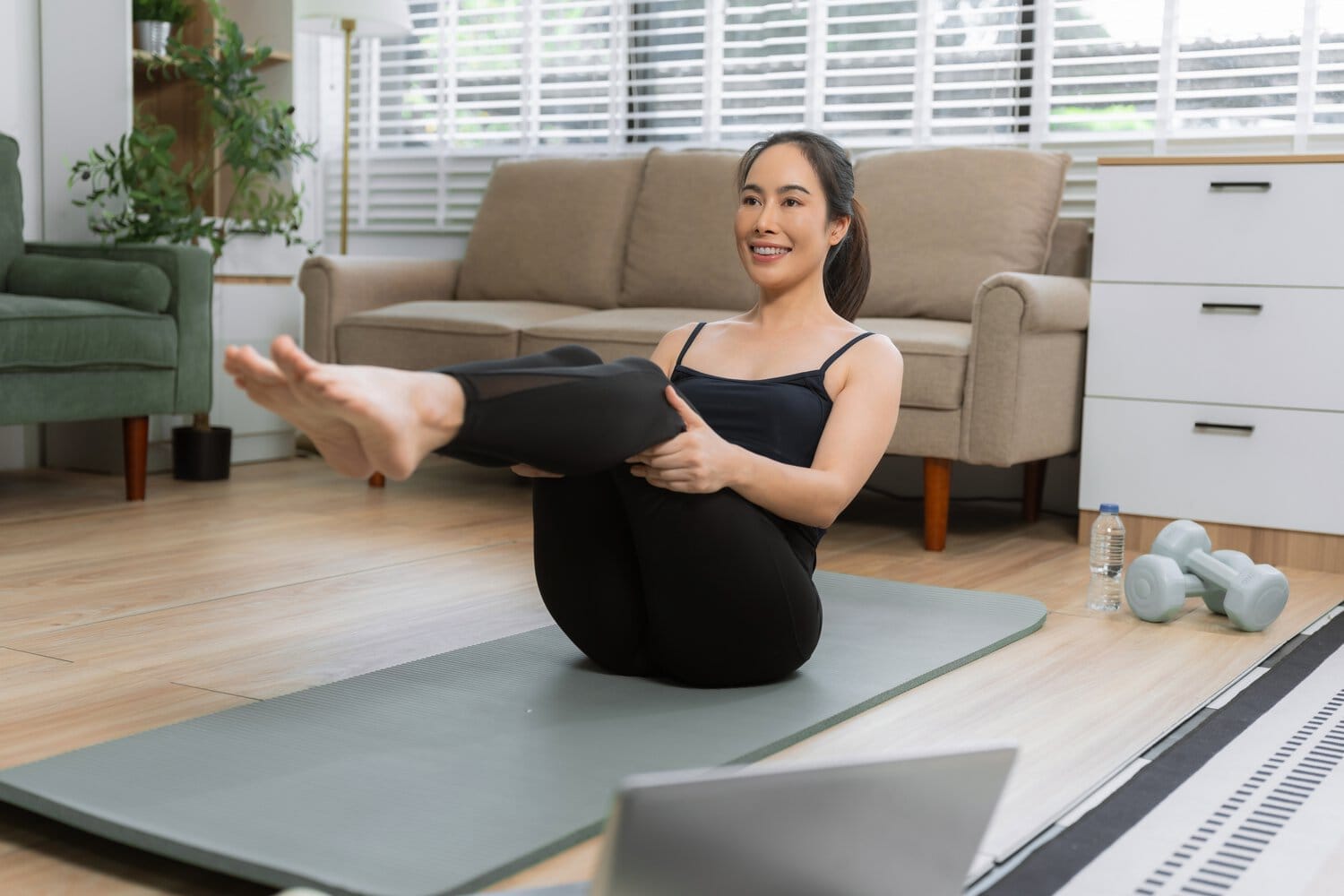
No equipment needed for these. All you need is a small space and a few minutes. These moves target the main muscle groups and build strength, stability, and endurance over time. They are among the best exercises for women at home who want to get started without any fuss.
Bodyweight Squats
Squats work the thighs, glutes, and core all at once. Stand with your feet shoulder-width apart, lower your hips as if sitting back into a chair, then return to standing. Keep your chest lifted and make sure your knees do not cave inward. Start with two sets of 12 and build from there.
Glute Bridges
Lie on your back with knees bent and feet flat on the floor. Push your hips up towards the ceiling, squeeze at the top, then lower back down slowly. This strengthens the glutes and lower back without putting any pressure on the knees or spine. It is a good option for beginners and anyone with joint sensitivity.
Push-Ups
Push-ups work the chest, shoulders, and the back of the arms while also engaging the core. If a full push-up is too challenging to start, doing them with your knees on the floor works just as well for building upper body strength. Work towards the full version over time.
Plank Hold
A plank strengthens the core muscles that support your posture and protect the lower back. Hold the position for 20 to 30 seconds to begin with and increase gradually. Keep your hips level throughout and avoid letting them sag or rise too high.
Brisk Walking
Walking is one of the most underrated forms of exercise. A daily brisk walk counts as moderate aerobic activity, it is free, low-impact, and easy to fit into any routine. Even 20 to 30 minutes a day can make a real difference in cardiovascular health, mood, and energy levels.
Dumbbell Exercises for Women at Home
Once you are comfortable with bodyweight moves, adding a pair of light dumbbells is an easy and affordable way to progress. Building on a home routine with dumbbell exercises means more muscle engagement, which is especially important for bone health as you get older. You do not need heavy weights to see results. Starting light and being consistent is what matters.
Dumbbell Shoulder Press
Hold a dumbbell in each hand at shoulder height with palms facing forward. Press both weights straight up until your arms are fully extended, then lower them back down with control. This builds shoulder and upper back strength and helps improve posture over time.
Dumbbell Deadlift
Stand with feet hip-width apart, holding the dumbbells in front of your thighs. Hinge forward at the hips, lowering the weights towards the floor with a flat back, then drive back up to standing. This is one of the most practical movements you can train as it mirrors everyday lifting and strengthens the whole back of the body.
Dumbbell Bent-Over Row
Hinge slightly forward at the hips and pull the dumbbells towards your lower ribs, keeping your elbows close to your sides. This targets the upper and mid-back muscles, which tend to weaken from long periods of sitting at a desk or looking at a phone.
How Exercise Supports Hormonal Health
Exercise does more for women’s health than just fitness. It plays a direct role in hormonal balance, particularly for women dealing with PCOS. A systematic review published in BMC Public Health found that regular physical activity improved menstrual frequency and helped reduce excess male hormone levels in women with PCOS. The main reason is that exercise improves the body’s response to insulin, and when insulin works better, hormones tend to stabilise too.
Exercise also helps keep cortisol, the body’s stress hormone, at a healthier level. When cortisol stays chronically high, it can disrupt the menstrual cycle and affect reproductive hormones. One thing worth knowing: very intense training without enough rest and nutrition can actually have the opposite effect, disrupting cycles. Moderate, consistent activity is what works best for most women, not extremes.
How Much Exercise Do You Actually Need?
The WHO physical activity guidelines recommend at least 150 minutes of moderate activity per week for adults, plus strength work on at least two days. This aligns with the Malaysian Ministry of Health’s own recommendations. In practice, that breaks down to about 30 minutes of moderate movement most days of the week. You can even split each session into shorter chunks throughout the day and it still counts. Some movement is always better than none, and starting small is completely fine.
Knowing When to Get Checked
Exercise is one of the best things you can do for your body, but it is not a substitute for proper medical care. If you have been noticing irregular periods, persistent fatigue, unexplained weight changes, difficulty conceiving, or pain that limits your movement, these are signs worth looking into properly. No amount of working out will resolve an underlying hormonal or gynaecological condition, and the sooner you get answers, the sooner you can take the right steps.
A visit to a women’s clinic gives you a clear picture of what is actually happening with your health. For women who are planning a pregnancy or want to understand their reproductive health better, a fertility screening package is a practical and empowering first step. Your health deserves more than guesswork.
At SpringHill Clinic, our team is ready to support you with personalised, evidence-based care in a private and comfortable space. Book an appointment today.
DISCLAIMER: The information in this article is intended for educational purposes only. It does not constitute medical advice and should not be used as a substitute for professional diagnosis, treatment, or consultation with a qualified healthcare provider. If you have concerns about your hormonal health, please speak with a registered medical practitioner.
References:
- Physical Activity. Retrieved on 8 April 2026, from https://www.who.int/news-room/fact-sheets/detail/physical-activity
- World Health Organization 2020 Guidelines on Physical Activity and Sedentary Behaviour. Retrieved on 8 April 2026, from https://pmc.ncbi.nlm.nih.gov/articles/PMC7719906/
- Benefits of Physical Activity on Reproductive Health Functions Among Polycystic Ovarian Syndrome Women: A Systematic Review. Retrieved on 8 April 2026, from https://link.springer.com/article/10.1186/s12889-023-15730-8
Frequently Asked Questions About Exercises for Women’s Health
What are the best exercises for women to do at home?
Bodyweight squats, glute bridges, push-ups, plank holds, and brisk walking are all highly effective and need no equipment. If you have a pair of dumbbells, exercises like the shoulder press, deadlift, and bent-over row are a great next step. All of these can be done in a small space at home and suit most fitness levels.
How often should women exercise at home?
Aim for at least 150 minutes of moderate activity spread across the week, plus two strength sessions. A 30-minute walk most days combined with two short strength workouts per week is a realistic and effective routine. Rest days matter too, especially between strength sessions, to allow muscles to recover properly.
Do dumbbell exercises help with hormonal balance in women?
Yes, strength training including dumbbell exercises can support hormonal health by improving how the body handles blood sugar and helping maintain a healthy body composition. For women with PCOS, resistance training has shown promise in reducing excess male hormone activity. Exercise is a helpful complement to medical care, not a replacement. If hormonal symptoms are persistent, speaking with a healthcare provider is the right next step.
Is it safe to exercise if I have PCOS?
Yes, exercise is generally very beneficial for women with PCOS. Both aerobic activity and strength training have been shown to help manage PCOS symptoms by improving insulin sensitivity and supporting healthier hormone levels. Moderate, consistent activity is the goal. If you are unsure where to start or have other health conditions, it is always a good idea to check with your doctor first before beginning a new routine.
What should I do if exercise is not improving my symptoms?
Exercise supports overall health but cannot diagnose or treat underlying conditions. If you have been active consistently and are still experiencing irregular periods, unexplained fatigue, weight changes, or difficulty conceiving, it is worth getting a proper health assessment. A hormonal blood test can give a clearer picture of what is happening, and a healthcare provider can guide you on the right next steps from there.

Dr Jasorthini is an experienced obstetrics & gynecology medical officer dedicated to delivering patient‑centred, evidence‑based care to women at every life stage. She brings a unique combination of clinical expertise and empathy, focused on helping every patient intently.